
Mobile vs Stationary Crushing Plant: Which Fits Your Project?
2026-11-13
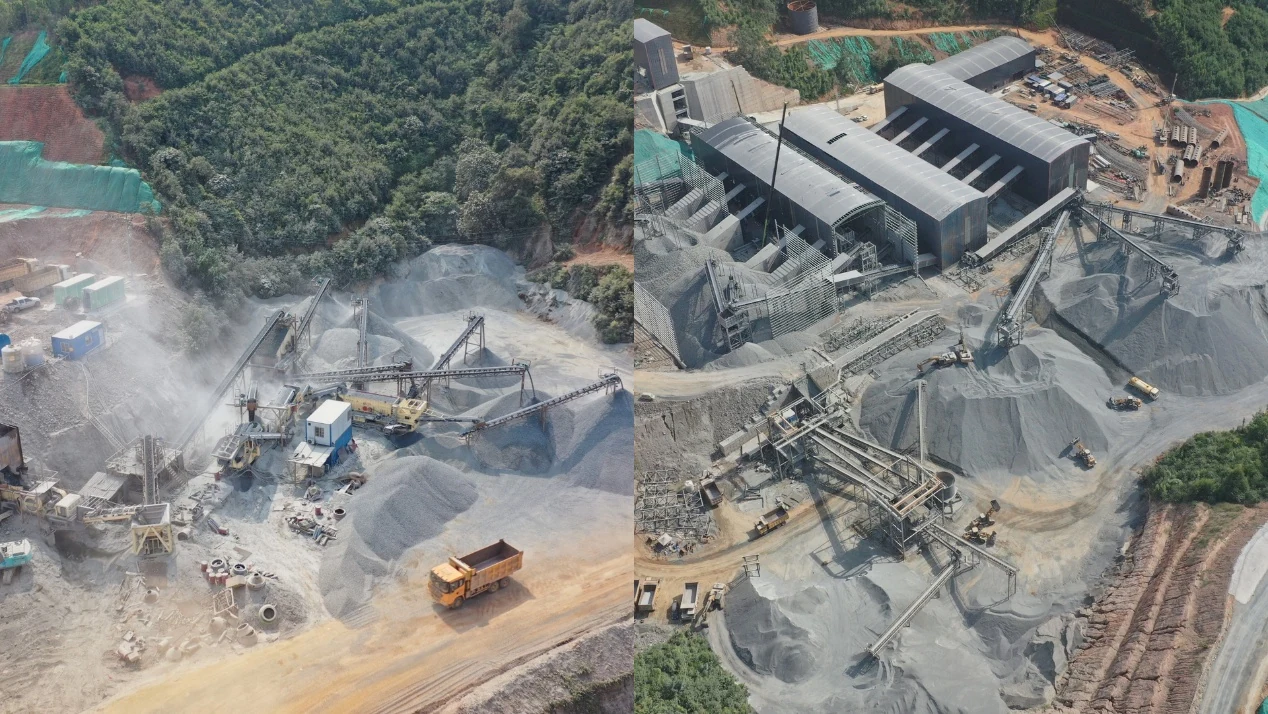
A contractor supplying aggregates to several construction sites faces a different equipment decision from a quarry producing at one location for many years. Even if both projects require the same hourly output, their installation costs, material transport distances and operating schedules can be very different.
A mobile crushing plant is worth considering when working closer to the material or moving between confirmed contracts can offset transport and repeated setup costs. A stationary plant is worth considering when stable production at one site can justify foundations, fixed conveyors and other permanent infrastructure. Compare both options against the same material, product specification and delivery schedule.
Between these options, a relocatable modular plant or a combination of mobile and stationary equipment may suit the project better.
The mobile vs stationary crushing plant decision therefore starts with three questions: how long will you produce, where will the equipment work, and what products must the plant deliver?
1. Start with Project Duration and Future Work
Project duration affects how much production is available to recover the initial investment. However, the length of one contract does not tell the whole story.
For a temporary infrastructure project, extensive foundations, permanent conveyors and buildings may have limited value after completion. A mobile crushing and screening plant can make sense if the equipment will move to another confirmed contract.
But that next project matters. A mobile plant sitting idle between contracts still ties up capital and requires maintenance. Assess the likely workload across several projects, including the time spent transporting, setting up and waiting for work.
For a long-term quarry, permanent infrastructure may be justified by regular production and stable demand. Nevertheless, a quarry with a moving extraction face should also compare the cost of hauling raw rock to a fixed plant against relocating primary crushing closer to the material.
There is no universal project duration at which stationary equipment becomes the cheaper choice. The answer depends on lifetime production, utilization, relocation costs and the value of the equipment after the current project.
2. How Often Will the Plant Move?
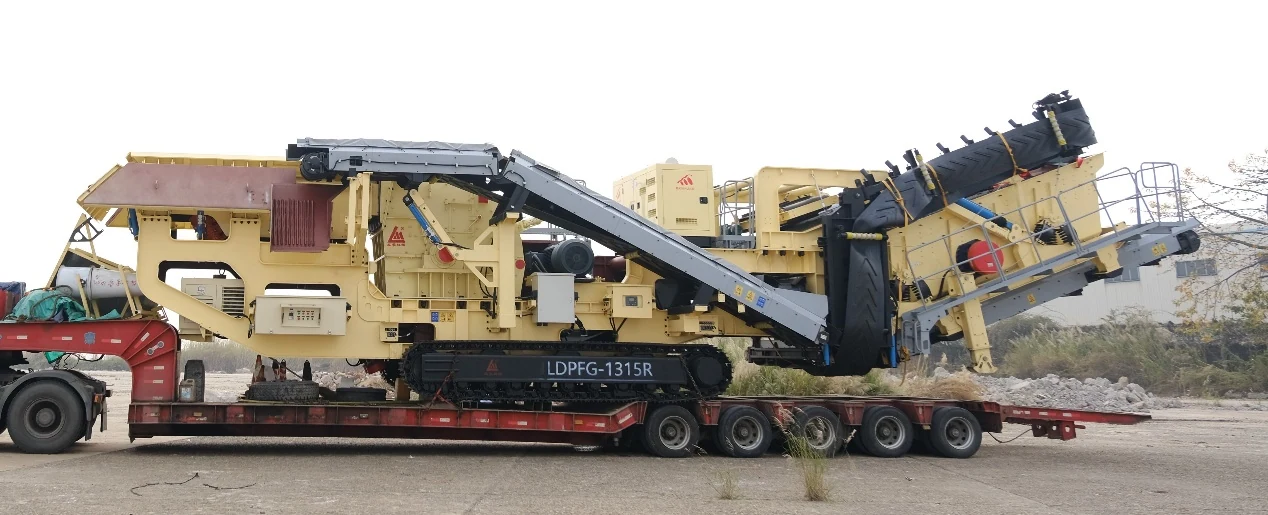
Moving within a quarry and transporting equipment to another region are different requirements.
| Project condition | Configuration worth evaluating | Main point to check |
|---|---|---|
| Frequent movement near the extraction face | Tracked mobile crushing plant | Ground conditions, operating position and discharge arrangement |
| Periodic relocation between separate sites | Wheeled mobile plant or relocatable modules | Transport dimensions, towing or loading arrangements and setup work |
| Long-term production at one location | Stationary crushing and screening plant | Feed logistics, foundations, stockpiles and future expansion |
| Moving raw material source with permanent downstream processing facilities | Mobile primary crushing with stationary downstream processing | Transfer distance, intermediate storage and equipment matching |
| Temporary additional production at an existing quarry | Mobile crushing or screening unit | Connection to the existing process and final product requirements |
Tracked equipment can reposition within a suitable site, but long-distance relocation normally requires transport vehicles. Wheeled equipment also needs a suitable transport arrangement; its chassis does not automatically make every configuration ready for unrestricted road travel.
Plan the move for the whole system, not just the crusher. A plant with primary crushing, secondary crushing, screening and separate conveyors may need several transport loads. Check transport dimensions, loading arrangements and the work required to reconnect the units before estimating relocation time and cost.
For each move, account for dismantling or folding equipment, loading, transport, unloading, reconnection and commissioning. The relevant figure is the time from the last saleable ton at one site to the first saleable ton at the next.
Relocatable equipment can also reduce raw-material haulage by working closer to the source, so compare equipment movement costs with the material transport costs it may avoid.
3. Set the Production Target Before Comparing Machines
Before comparing plant capacities, define what “300 t/h” means for your project. Is it the raw material entering the plant, the material passing through a crusher, or the finished aggregate that meets your specification?
In this guide, saleable output means finished material that meets the required size and quality specifications and can be delivered to the client. In a closed circuit, oversized material returns to the crusher, so the crusher may process more material than the plant delivers as finished product.
Before selecting the plant configuration, define:
- Raw material, maximum feed size and abrasiveness.
- Required hourly and annual saleable output.
- Final product sizes and the proportion required in each fraction.
- Particle shape, grading and cleanliness requirements.
- Moisture, clay content and washing needs.
- Working hours, seasonal demand and planned maintenance.
For hard, abrasive feed such as many granite and basalt deposits, a jaw crusher followed by cone crushing is a common configuration to evaluate. An impact crusher may suit lower-abrasion limestone where the feed size and product requirements allow. Rock names alone are not enough: strength, abrasiveness, clay content and feed grading should be checked before selecting the process.
A properly matched mobile plant can produce specified aggregates. A stationary plant can struggle if its screen, feeder or conveyor is undersized. Plant configuration alone determines neither capacity nor product quality.
4. Compare the Full Startup Cost
An equipment quotation is only part of the startup budget. Compare both options at the same process scope and production target.
| Cost or site requirement | Mobile crushing plant | Stationary production line |
|---|---|---|
| Equipment purchase | Include chassis, onboard systems and every required unit | Include machines, support structures, controls and connecting equipment |
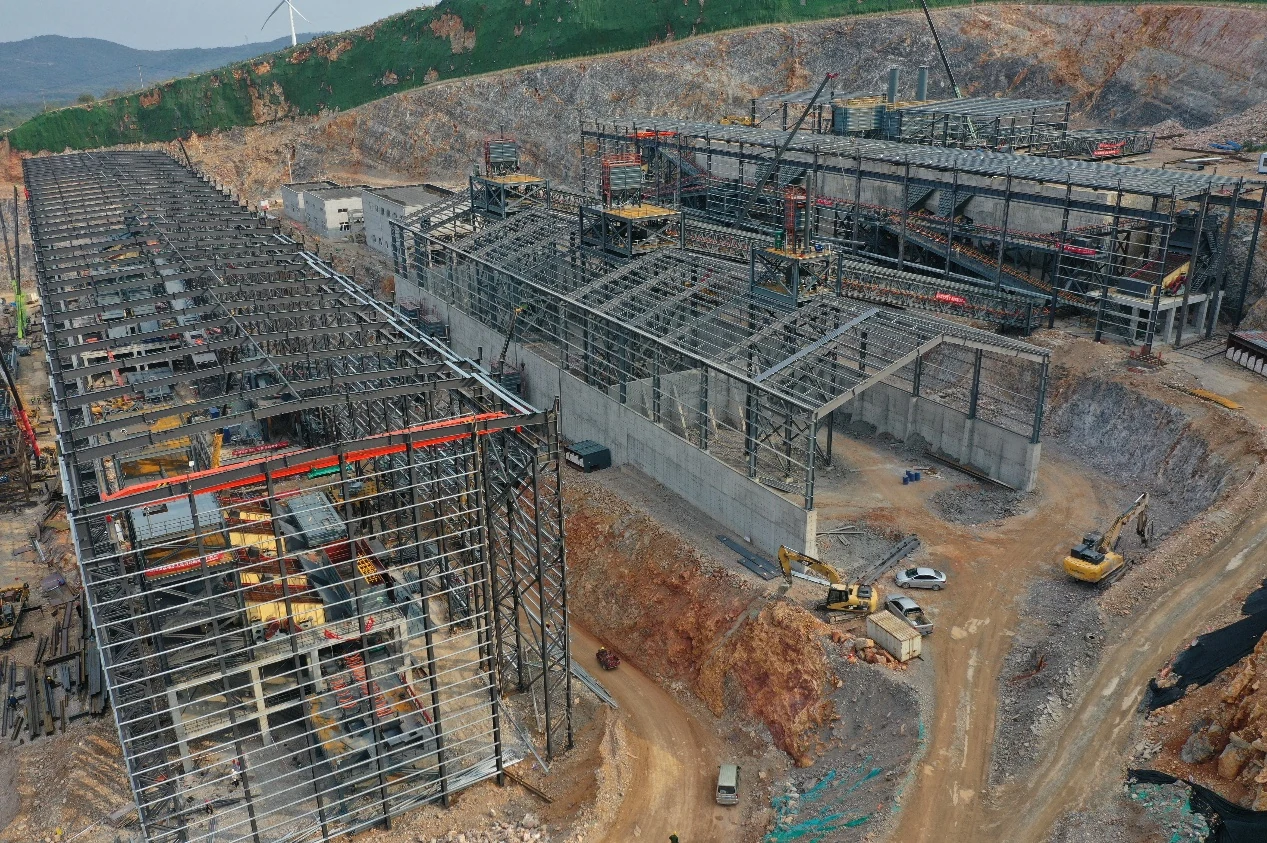
| Ground preparation | Requires ground with adequate bearing capacity, drainage and operating levels | Requires foundations and civil works designed for the installation |
| Feeding arrangement | Check loader access, hopper capacity and loading height | Check receiving hopper, truck access and buffer storage |
| Power supply | Confirm the actual diesel, electric or hybrid configuration | Assess grid connection, distribution and backup requirements |
| Conveying and stockpiling | Additional conveyors may be needed beyond onboard discharge belts | Conveyor routes and stockpile capacity form part of the overall layout |
| Dust and water management | Must be planned at each operating site | Can be integrated into the permanent layout |
| Completion or relocation | Include transport, recommissioning and site restoration | Include dismantling, recovery value and site restoration where applicable |
Mobile equipment can reduce some installation work, but it still needs a functioning production site. Poor drainage, limited loader access or insufficient stockpile space can restrict output regardless of how quickly the crusher arrives.
Conversely, stationary infrastructure can provide useful buffer storage and organized material flow. Its value depends on how consistently the project uses it.
5. Evaluate Long-Term Cost per Saleable Ton
The lowest purchase price does not necessarily produce the lowest operating cost.
Compare both options over the same period and against the same product requirements. The useful question is: how much will it cost to deliver each ton of aggregate that meets the specification?
Cost per saleable ton = total project cost over the comparison period ÷ saleable tons produced in that period
Include equipment, site preparation, installation, energy, wear parts, labor, maintenance, material handling and relocation. Where relevant, add financing interest, fees and site restoration costs, then deduct a reasonable residual value.
Use realistic finished output after setup time, maintenance, stoppages and rejected material. Rated capacity multiplied by scheduled hours can overstate what the project will actually deliver.
Count each cost once. If equipment purchase cost is included, do not add depreciation or loan principal repayments again.
Material transport. Mobile primary crushing may reduce the distance that raw rock travels. However, extra loading or transfers between poorly positioned units can offset part of that saving.
Wear and maintenance. Abrasive rock affects jaw plates, cone liners and other wear parts in either format. Mobile equipment also requires attention to chassis, travel systems and folding mechanisms where fitted.
System bottlenecks. Screen blinding, overloaded return conveyors, belt mistracking and inadequate stockpile capacity can reduce saleable output even when the crusher is operating normally.
How Lost Production Time Changes the Capacity You Need
Suppose a contract requires 400,000 tons of finished aggregate:
- With 2,000 productive hours, the plant must average 200 t/h of saleable output.
- If setup, relocation and downtime reduce productive hours to 1,600, the required average rises to 250 t/h.
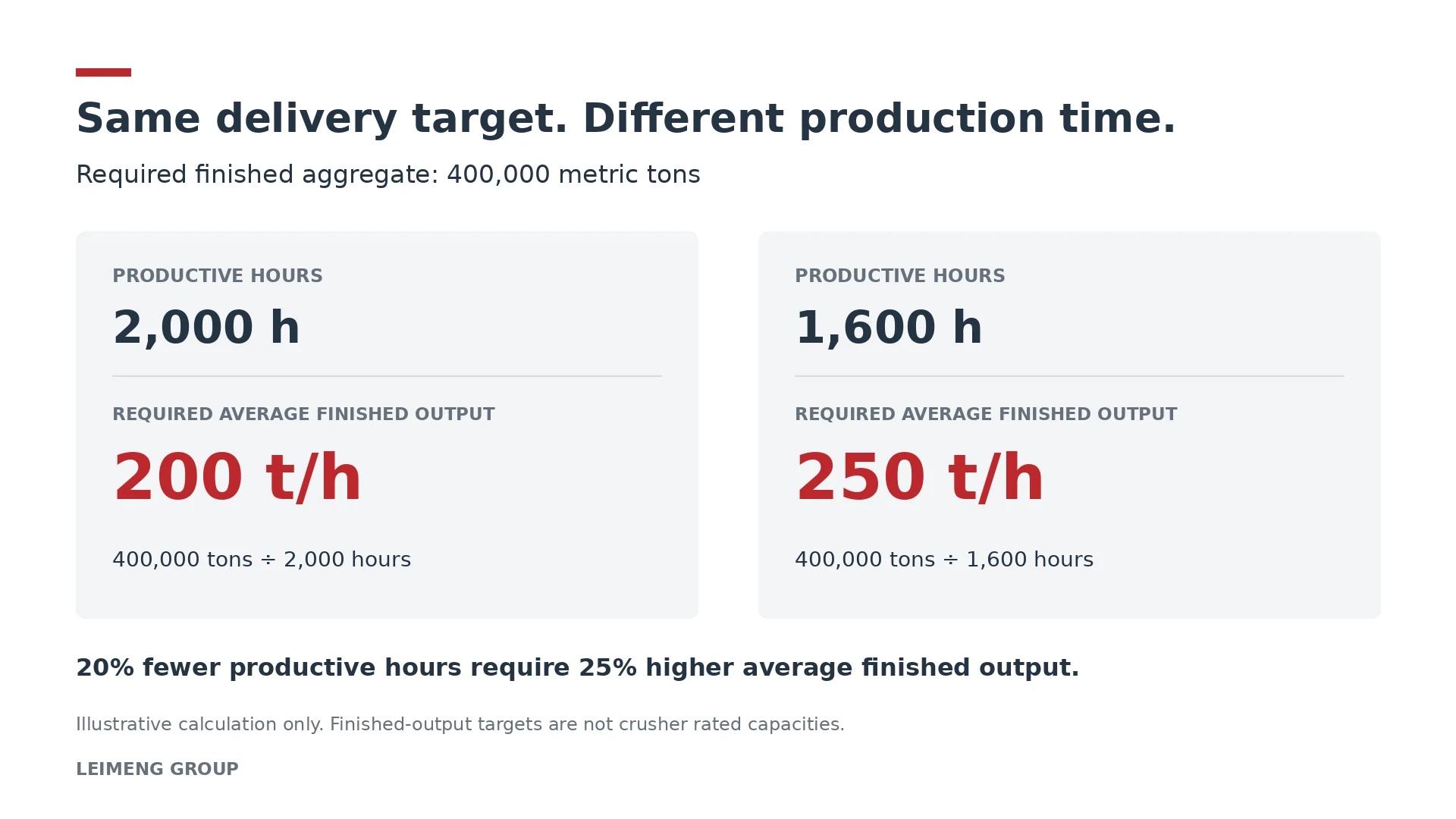
The delivery volume is the same, but the plant has less time to produce it.
These are finished-output targets, not crusher ratings. The selected system must allow for material returned for further crushing, the proportion of output that meets specification, and the capacity of the screen and conveyors.
This example illustrates the calculation; it is not a Leimeng equipment performance claim.
6. Match the Configuration to the Project Scenario
Several Contracts at Different Locations
Mobile equipment deserves close evaluation when confirmed contracts require repeated relocation. Check that each site can support the plant and that the proposed configuration can process the different feed materials.
For occasional moves with extended production at each site, wheeled equipment or relocatable modules may offer a useful balance. Frequent movement within the working area may favor tracked equipment.
A Quarry with Stable Long-Term Demand
A stationary plant deserves close evaluation when reserves, sales demand and site access support sustained production. Its layout can be designed around buffer storage, multiple product fractions, washing and future expansion.
Still, compare the future hauling distance as extraction progresses. A fixed plant that is economical today may face higher material handling costs later.
High-Quality Aggregate or Manufactured Sand
Start with the product specification. Determine the required crushing stages and screening area, then check whether shaping or washing is needed before choosing a mobile or stationary configuration.
A temporary project with demanding product requirements may need several mobile units. A permanent project with uncertain demand may benefit from a staged investment rather than a large installation from the outset.
An Existing Plant with One Weak Stage
A complete replacement may be unnecessary. Additional mobile screening, supplementary crushing or a revised conveyor arrangement may address the constraint.
Evaluate the interface with the existing line, including feed size, discharge height, return load and controls.
7. Discuss Your Project with Leimeng Group
Leimeng Group’s LTH wheeled mobile plants, LD tracked mobile equipment and LMH modular plants provide different configurations to evaluate alongside a stationary production line. The choice should follow the required crushing and screening process, relocation plan and site conditions. For projects requiring manufactured sand or washing, the comparison should also include the necessary downstream equipment and utilities.
For a useful comparison, provide:
| Project information | Why it matters |
|---|---|
| Project duration and expected next contract | Establishes the investment recovery period and reuse potential |
| Relocation frequency and distance | Determines transport work and production interruptions |
| Raw material and maximum feed size | Guides crusher type, crushing stages and wear planning |
| Hourly and annual saleable output | Connects equipment capacity with the delivery schedule |
| Product sizes, shape and application | Defines screening, shaping and washing requirements |
| Moisture and clay content | Identifies feeding, screening and cleaning risks |
| Site layout, ground conditions, power and water | Defines installation scope and operating constraints |
| Existing equipment and future expansion | Helps assess integration and staged investment |
Planning a new quarry or a series of crushing contracts? Start by sharing your material, maximum feed size, required product sizes, target output and project location with Leimeng Group. Add the project duration and expected relocation schedule so that mobile, stationary and modular options can be compared on the same basis.
FAQ
Is a mobile crushing plant always cheaper for a short project?
No. Reduced installation work must be weighed against equipment cost, transport, repeated setup and the likelihood of productive work after the contract.
Can a mobile crushing plant produce high-quality aggregate?
Yes, with a suitable crushing and screening process. Quality depends on the material, machine settings, screening accuracy and any required shaping or washing.
Do mobile crushing plants need foundations?
They generally need suitable prepared ground and the support arrangement specified for the equipment. Some installations also require local civil works. Site preparation should be checked for the proposed configuration.
Which is better for relocation: tracked or wheeled equipment?
Tracked equipment suits movement within an appropriate working site. Wheeled equipment can suit periodic site-to-site relocation. Assess transport loads, route conditions and setup requirements for both.
Can mobile and stationary equipment work together?
Yes. Examples include mobile primary crushing feeding stationary downstream processing, or mobile screening supplementing an existing line. Their capacities and transfer arrangements must be matched.